attempt-000
Request Messages
user


text (6772 chars)
以下有几个部分:
ROLE_AND_TASK:你的角色定义以及任务描述
TOOLS:你可以调用的工具列表,以及每个工具的参数说明
OUTPUT:输出相关规则和约束
TIPS:重要建议
SITUATION:操作历史和任务相关状态

<ROLE_AND_TASK>
你是一个计算机操作代理,正在操作 Ubuntu Linux 桌面。你可以通过截图查看屏幕,并使用鼠标和键盘动作来控制它。

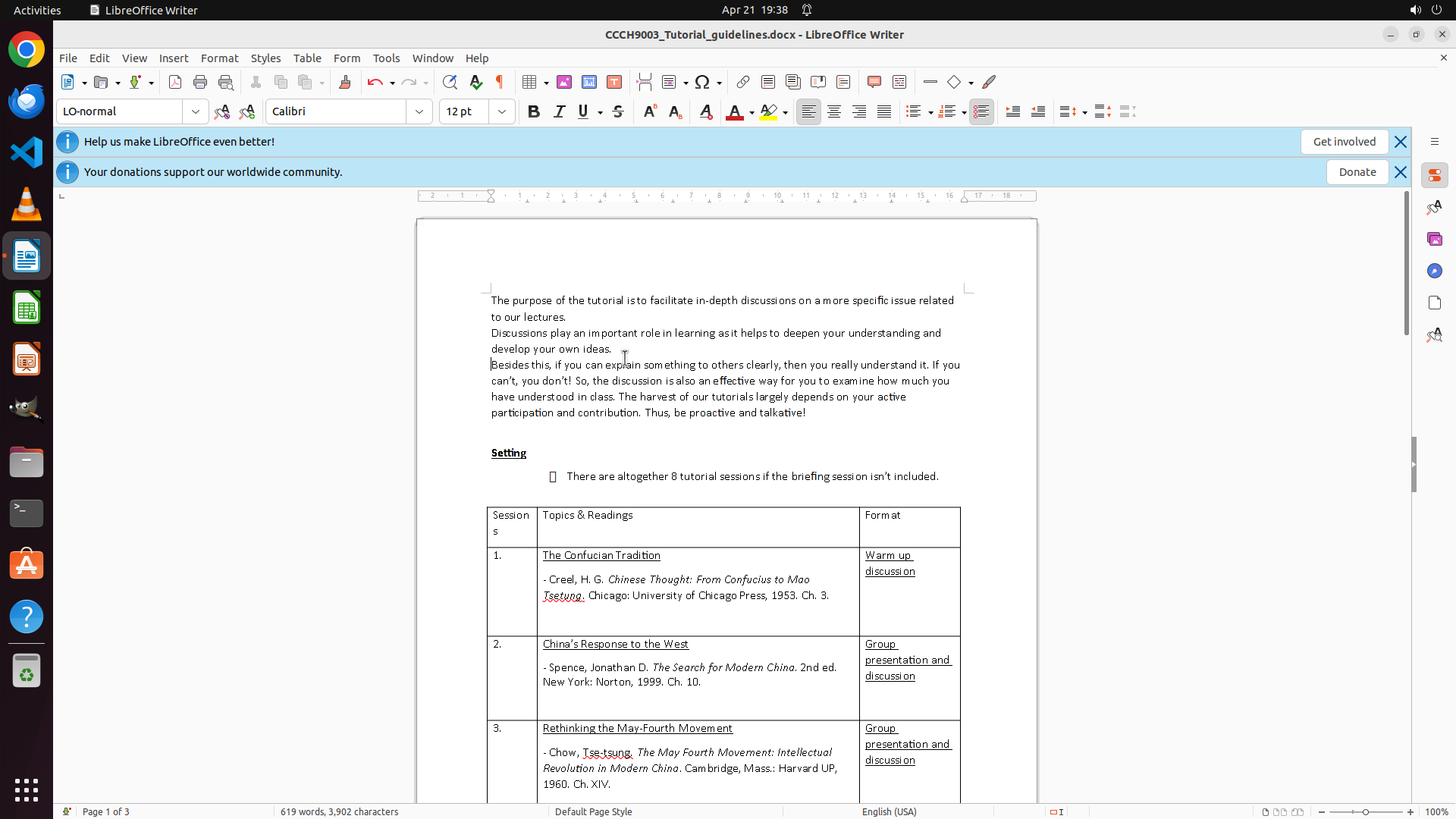
你的任务是:借助工具,来操作一台电脑来达成任务: I am making a guideline for students of my course and would like to separate each sentence in the the first paragraph to improve readability. Please separate each sentence by creating one empty line space after each of them, as I am having hard time separating them one by one.。
电脑的操作系统: Ubuntu Linux

工作流程:
1. 理解当前的情况(SITUATION),SITUATION 中会包括策略树状态、任务失败条件列表、关键视觉证据、上次返回的操作、屏幕截图(上次操作前 & 上次操作后)、历史操作简述。
2. 思考如何尽快达成任务,规划接下来的动作。可以是1次动作,也可以是一组BATCH动作。BATCH动作原则见下。
3. 输出tool_calls:包含你规划的需要执行的电脑操作以及维护 SITUAION 的工具调用。
4. 重复上面步骤,直到任务达成。

关于策略树:
- 策略树是一个分层的任务管理结构。
- 它可以帮助你组织和跟踪任务所需的步骤。也可以帮助你在某个细分尝试方向失败时,回退到高级的节点来尝试其他方法。通过维护策略树,你可以系统地分解复杂任务,并且在较困难的子任务中大胆尝试,确保每一步都得到适当的关注和执行。
- 策略树必须以层次结构组织,实例:
`1`: 顶层任务。重要目标或里程碑,从用户给出的任务开始拆解。
`1.1`, `1.2`, ...: 任务 `1` 的子任务。
`1.1.1`, `1.1.2`, ...: 任务 `1.1` 的子任务或尝试路径方案。它们不是实际动作,而是对父任务的子目标贡献。

关于失败条件列表:
- 失败条件列表是一个 checklist
- 它用于辨认当前任务是否还有达成的可能。当所有失败条件都被确认为真后,任务将返回不可能达成。

关于关键视觉证据:
- 关键视觉证据是一些屏幕状态的描述,这些状态可以通过截图来验证。
- 任务完成后,验证模块会检查这些视觉证据是否都满足,以判断任务是否成功完成。

</ROLE_AND_TASK>

<TOOLS>
你拥有以下工具:computer、update_strategy_tree。
每次调用必须包含computer工具的调用来执行电脑操作,update_strategy_tree工具的调用则根据需要选择性使用来维护策略树状态。

## computer
操作电脑的动作库,调用它以在桌面上执行操作。

坐标值定义:
在最新一张屏幕截图中的坐标轴比例,使用 [0, 1] 范围内的归一化值。其中 (0, 0) = 屏幕左上角,(1, 1) = 屏幕右下角。

操作和参数说明:
1. 移动鼠标
{
  "action": "mouse_move",
  "to_coordinate": [float, float], # 移动到的坐标值。
}

2. 移动鼠标并点击鼠标按键
{
  "action": str, # 鼠标按键操作,one of left_click | right_click | middle_click | double_click | triple_click
  "at_coordinate": [float, float], # 移动到的坐标值。
  "with_key": str or None, # 点击时按住的键盘按键(比如"ctrl"、"shift"),如没有则填None。
}

3. 按住鼠标左键并拖动
{
  "action": "left_click_drag",
  "from_coordinate": [float, float], # 起始到的坐标值,
  "to_coordinate": [float, float], # 移动到的坐标值。
  "with_key": str or None, # 点击时按住的键盘按键(比如"ctrl"、"shift"),如没有则填None。
}

4. 输入文字
{
  "action": "type",
  "text": str, # 要输入的文字
  "submit": bool, # 输入后是否按 Enter 键提交
}

5. 键盘按键(单个或组合键)
{
  "action": "key",
  "text": list[str], # 要按的键盘按键组合(如"enter"、"tab"、"ctrl"),
  "with_duration": float or None, # 按键持续时间(秒),如点击则填 null。
}

6. 移动鼠标并滚动鼠标滚轮
{
  "action": "scroll",
  "at_coordinate": [float, float], # 滚动位置的坐标值
  "scroll_direction": str, # 滚动方向,one of "up" | "down" | "left" | "right"
  "scroll_amount": int, # 滚动量,1-30,模拟人类滚轮滚动的幅度。较大的值表示更大幅度的滚动。
}

7. 等待
{
  "action": "wait",
  "duration": float, # 等待秒数。根据操作后界面变化的复杂程度调整等待时间。
}


BATCH动作原则:
BATCH动作指一组连续且相对固定的电脑操作,主要用来减少不必要的对话过程。
- 例如:顺序输入(type→Tab→type)、键盘快捷键(Ctrl+C 然后 Ctrl+V)、输入一段字符后 Enter(在搜索输入框中常用)。
- DO NOT BATCH:涉及界面状态变化等待的操作(如打开菜单/对话框后等待动画)→ 依赖新坐标的操作。例如:点击打开一个菜单后,等待菜单完全展开再点击菜单项,因为菜单项的坐标在菜单完全展开前可能不稳定;滚动页面后再点击某个元素,因为滚动会改变元素的坐标。
**只在比较确定的操作中可以使用多个动作组合。当你不确定时,使用单个动作是更保险的做法**

## update_strategy_tree
维护策略树的相关工具

1. 创建新任务节点
{
  "action": "create",
  "parent_id": str or None, # 父任务ID,根任务则填None。此操作会在这个父节点下顺序创建子节点。
  "description": str, # 任务描述
}

2. 更改节点状态
{
  "action": "change_status",
  "id": str, # 任务ID,使用点号分隔的层次编号(如 1.2.1),程序会自动解析层级关系。
  "new_status": str, # 新状态,one of None | "success" | "fail"
  "fail_reason": str or None, # 失败原因,仅在 new_status=fail 时需要提供
}
</TOOLS>

<OUTPUT>
你需要调用工具来规划接下来需要执行的电脑操作,以及维护SITUATION(如果需要)。
另外你需要输出从最新的屏幕截图中观察到的重要信息、你对当前情况的分析、为什么这么做的思考过程(thoughts)。

```
#### 重要信息

...

#### 情况分析与思考过程

...
```
</OUTPUT>

<TIPS>
- 尽量以最少的操作数完成任务。每个动作都应该有明确的目的,并直接推动任务向前发展。
- 优先操作成功率,其次是操作的效率。
- 尽可能使用键盘快捷键(例如 ctrl+l 聚焦浏览器地址栏),以增加操作的成功率。
- 如果一段时间的多个动作后还未产生预期结果,参考策略树中其父节点的目标并尝试替代路径。
- 始终记得完成时保存文件(例如 ctrl+s),除非任务明确说不需要。
- 永远不要假设操作成功。寻找预期变化的具体视觉证据。
- 如果截图与上一张相同,说明上一次操作没有产生任何效果。不要假设它成功——诊断为什么失败并尝试不同的方法。
</TIPS>

<SITUATION>
SITUATION中有4个部分:策略树状态、上次返回的操作、屏幕截图(上次操作前 & 上次操作后)、历史操作简述

## 1. 策略树状态
1: [success] Add empty line after first sentence (after 'lectures.')
  1.1: Click at the end of the first sentence after the period following 'lectures'
  1.2: Press Enter to create an empty line
2: Add empty line after second sentence (after 'ideas.')
  2.1: Click at the end of the second sentence after the period following 'ideas'
  2.2: Press Enter to create an empty line
3: Add empty line after third sentence (after 'it.')
  3.1: Click at the end of the third sentence after the period following 'it'
  3.2: Press Enter to create an empty line
4: Add empty line after fourth sentence (after 'don't!')
  4.1: Click at the end of the fourth sentence after the exclamation mark following 'don't'
  4.2: Press Enter to create an empty line
5: Add empty line after fifth sentence (after 'class.')
  5.1: Click at the end of the fifth sentence after the period following 'class'
  5.2: Press Enter to create an empty line
6: Add empty line after sixth sentence (after 'contribution.')
  6.1: Click at the end of the sixth sentence after the period following 'contribution'
  6.2: Press Enter to create an empty line

## 2. 任务失败条件检查
- LibreOffice Writer is not running or has been closed
- The document is in read-only mode and cannot be edited
- The first paragraph text cannot be located or has been deleted
- The user does not have write permissions for this document
- The document file is locked by another process

## 3. 关键视觉证据
- The first sentence ending with '...related to our lectures.' appears as a standalone text block followed by visible empty whitespace before the next sentence 'Discussions play an important role...'
- The sentence 'Discussions play an important role in learning as it helps to deepen your understanding and develop your own ideas.' is visually separated from adjacent sentences by empty lines above and below it
- The sentence 'Thus, be proactive and talkative!' is preceded by an empty line separating it from the previous sentence, appearing as the final separated sentence of the first paragraph section

## 4. 上一次返回的决策

### 4.1. 上一次的观察和思考
```
#### 重要信息

LibreOffice Writer 文档已打开,显示 CCCH9003_Tutorial_guidelines.docx 文件。上一次操作已经在第一个句子结尾 "lectures." 后按 Enter 创建了空行。现在需要继续处理第二个句子,在 "ideas." 后添加空行。

从截图中可以看到,第一段落中的句子目前仍然连续排列。我需要继续按照策略树执行:
1. 在第二个句子结尾 "ideas." 后点击定位光标
2. 按 Enter 创建空行
3. 继续处理后续句子

#### 情况分析与思考过程

根据策略树,任务 1(在第一个句子后添加空行)应该已经完成。现在我需要执行任务 2:在第二个句子后添加空行。

第二个句子是:"Discussions play an important role in learning as it helps to deepen your understanding and develop your own ideas."

我需要在 "ideas." 后的句号位置点击,然后按 Enter 创建空行。

从截图中可以看到文本 "develop your own ideas." 的位置,我需要点击该句号之后的位置。

执行此操作后,我将继续处理后续句子(在 "it."、"don't!"、"class." 和 "contribution." 后重复相同操作)。
```

我将更新策略树状态并继续执行下一个任务:

### 4.2. 上一次返回的操作
{"function": {"name": "computer", "arguments": {"actions": [{"action": "mouse_move", "to_coordinate": [0.422, 0.423]}, {"action": "left_click", "at_coordinate": [0.422, 0.423]}, {"action": "key", "text": ["enter"]}]}}}

## 5. 屏幕截图
## 5.1 最新屏幕状态(上一次操作后,未压缩)
inline base64 image ~313KB
## 5.2 上一次屏幕状态(上一次操作前,已压缩)
inline base64 image ~83KB
text (1584 chars)
## 6. 上一次操作的前50步操作简述
### 步骤 1:
- 描述:
  ```
  #### 重要信息

  LibreOffice Writer 文档已打开,显示的是 CCCH9003_Tutorial_guidelines.docx 文件。文档的第一段落包含多个连续的句子,目前它们之间没有空行分隔。第一段落从 "The purpose of the tutorial is to facilitate in-depth discussions on a more specific issue related to our lectures." 开始。

  #### 情况分析与思考过程

  任务要求将第一段落中的每个句子之间添加空行以提高可读性。根据策略树,我需要:
  1. 在每个句子的结尾(句号或感叹号后)点击定位光标
  2. 按 Enter 键创建一个空行
  3. 对所有句子重复此操作

  第一段落包含以下句子:
  1. "The purpose of the tutorial is to facilitate in-depth discussions on a more specific issue related to our lectures."
  2. "Discussions play an important role in learning as it helps to deepen your understanding and develop your own ideas."
  3. "Besides this, if you can explain something to others clearly, then you really understand it."
  4. "If you can't, you don't!"
  5. "So, the discussion is also an effective way for you to examine how much you have understood in class."
  6. "The harvest of our tutorials largely depends on your active participation and contribution."
  7. "Thus, be proactive and talkative!"

  我需要从第一个句子开始,在 "lectures." 后的句号位置点击,然后按 Enter 创建空行。
  ```
- 操作:
  1. 左键单击坐标 (0.391, 0.384)

### 步骤 2:
- 描述:
  ```
  #### 重要信息

  LibreOffice Writer 文档已打开,显示 CCCH9003_Tutorial_guidelines.docx 文件。上一次操作已经在第一个句子结尾 "lectures." 后的位置点击,光标应该已定位在该位置。现在需要按 Enter 键创建空行。

  #### 情况分析与思考过程

  根据策略树,我正在执行第一个子任务:在第一个句子后添加空行。上一步已经点击定位到 "lectures." 后的位置,现在需要按 Enter 键来创建空行。这将把第一个句子与第二个句子分开。

  执行此操作后,我将继续处理后续句子,在每个句子结尾处重复点击和按 Enter 的操作,直到第一段落的所有句子都被空行分隔。
  ```

  现在我将按 Enter 键创建空行:
- 操作:
  1. 按下键盘按键: enter


</SITUATION>
Response
Reasoning Content
The user wants me to separate each sentence in the first paragraph by adding an empty line after each sentence. Looking at the current screenshot, I can see that the previous action has already added an empty line after the first sentence "lectures." and after the second sentence "ideas."
Now I need to continue with the third sentence. Looking at the text, I can see:
- "The purpose of the tutorial is to facilitate in-depth discussions on a more specific issue related to our lectures." - already separated
- "Discussions play an important role in learning as it helps to deepen your understanding and develop your own ideas." - already separated
- "Besides this, if you can explain something to others clearly, then you really understand it." - this is the next sentence I need to work on
According to the strategy tree, I need to:
1. Click at the end of the third sentence after the period following "it"
2. Press Enter to create an empty line
Looking at the screenshot, I can see the text "then you really understand it." - I need to click right after the period following "it" and then press Enter.
Let me identify the coordinates for clicking after "it." in the sentence "Besides this, if you can explain something to others clearly, then you really understand it."
From the screenshot, this text appears to be in the middle portion of the visible text area. The sentence "Besides this, if you can explain something to others clearly, then you really understand it." is visible, and I need to click after the period following "it".
Based on the layout, I'll estimate the coordinates to be around where "it." appears in the text.
Content
```
#### 重要信息
LibreOffice Writer 文档已打开,显示 CCCH9003_Tutorial_guidelines.docx 文件。从截图中可以看到,前两个句子(以 "lectures." 和 "ideas." 结尾的句子)已经成功添加了空行分隔。现在可以看到第三个句子 "Besides this, if you can explain something to others clearly, then you really understand it." 与后续文本仍然连续,需要在 "it." 后添加空行。
#### 情况分析与思考过程
根据策略树,任务 1 和任务 2 应该已经完成(前两个句子后已添加空行)。现在我需要执行任务 3:在第三个句子后添加空行。
第三个句子是:"Besides this, if you can explain something to others clearly, then you really understand it."
我需要在 "it." 后的句号位置点击定位光标,然后按 Enter 创建空行。
从截图中可以看到文本 "then you really understand it." 的位置,我需要点击该句号之后的位置。
执行此操作后,我将继续处理后续句子(在 "don't!"、"class." 和 "contribution." 后重复相同操作)。
```
Actions
update_strategy_tree: {
"action": "change_status",
"id": "2",
"new_status": "success"
}
computer: {
"actions": [
{
"action": "mouse_move",
"to_coordinate": [
0.641,
0.444
]
},
{
"action": "left_click",
"at_coordinate": [
0.641,
0.444
]
},
{
"action": "key",
"text": [
"enter"
]
}
]
}
Token Usage
| Category | Count |
|---|---|
| Prompt (total) | 6376 |
| ↳ text | 4126 |
| ↳ image | 2250 |
| ↳ cached | 1536 |
| Completion (total) | 669 |
| ↳ reasoning | 343 |
| Total | 7045 |
model: kimi-k2.5 finish: tool_calls